Minestrone Soup
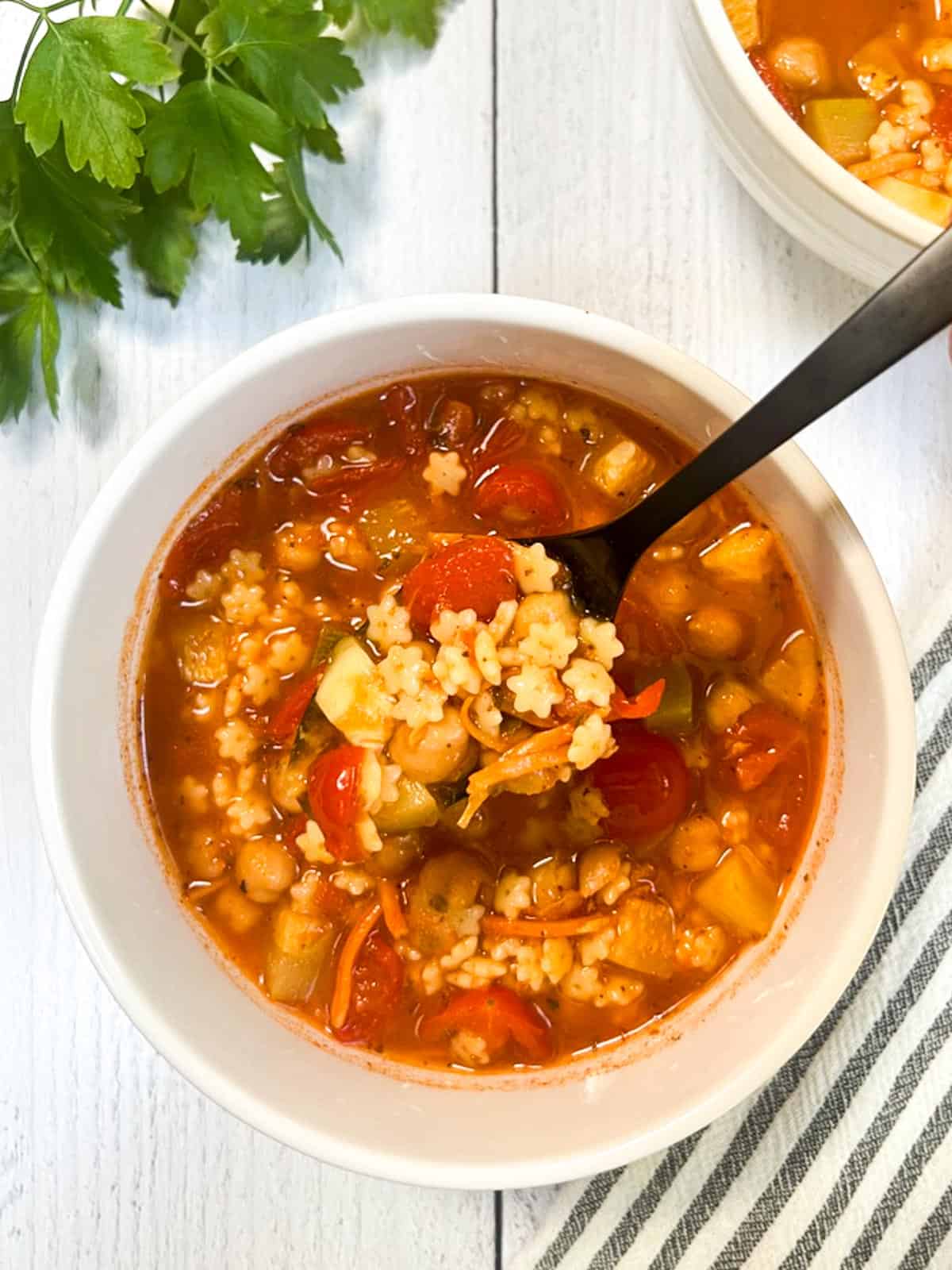
This easy vegan minestrone soup brings all the flavors of a summer garden to your table! A healthy, beginner-friendly recipe you’ll want to make again and again.
Why you’ll love this recipe
- Super easy: Vegan minestrone soup is perfect for beginners or anyone short on time. With simple ingredients, minimum prep, and hands-off cooking, it’s a great choice for a comforting meal that does not require hours in the kitchen.
- Healthy: This light and flavorful soup is so delicious you’ll forget how healthy it is! Packed with fresh produce, plant-based protein, and fiber, it’s a clean and healthy choice to fuel your body.
- Versatile: This recipe is endlessly flexible and forgiving. You can easily substitute seasonal vegetables or pantry staples to use up what you have on hand, avoiding food waste and a trip to the store.
Ingredients
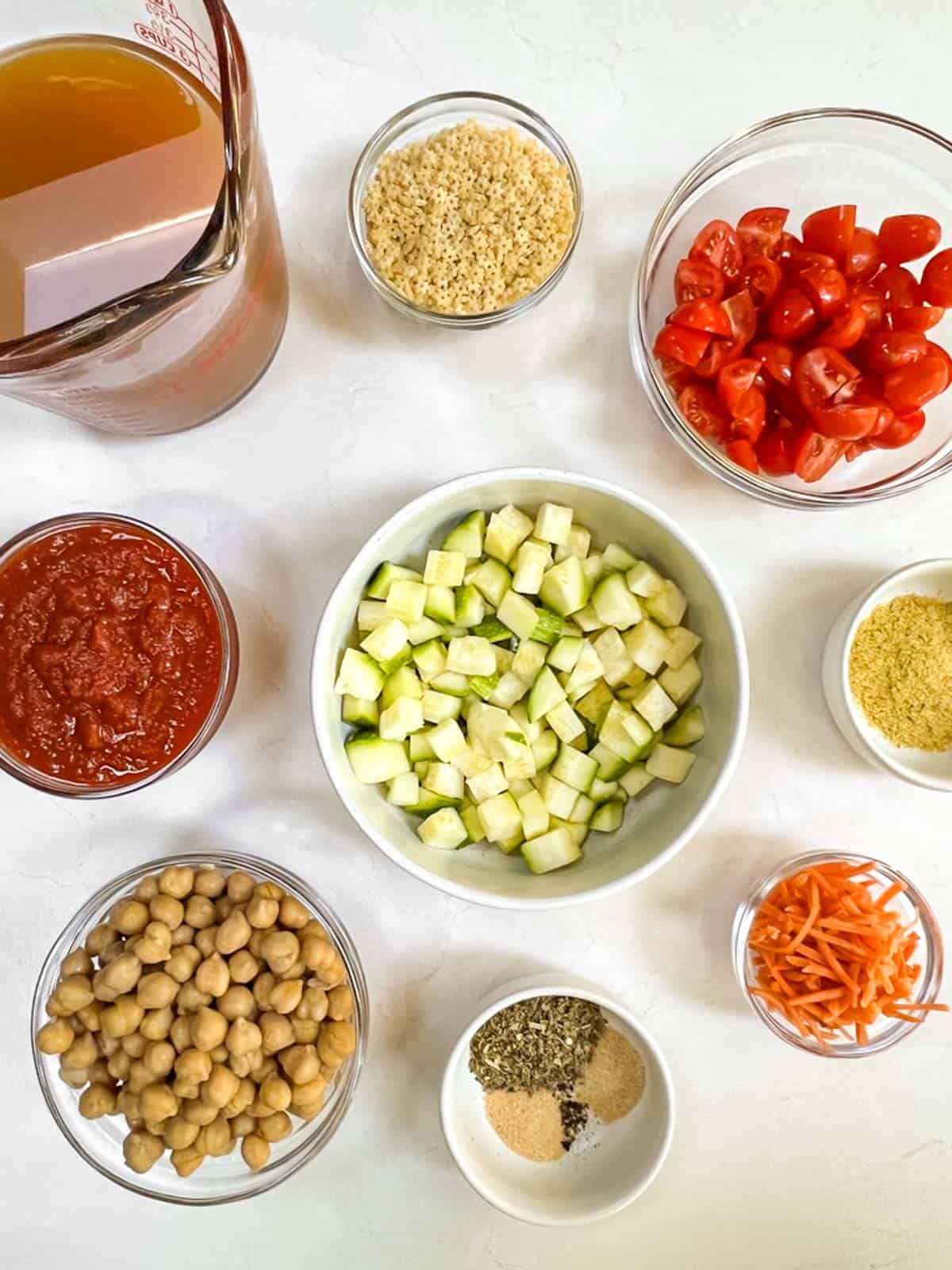
- Short pasta: Adds a pleasant chewy texture. Opt for whole-grain or chickpea pasta for an added nutritional boost, or use gluten-free pasta if you are avoiding gluten. I used stelline (cute little star shapes, but not all stores carry them). Ditalini, rotini, elbow macaroni, or small shells also work well.
- Zucchini: Adds color, a soft texture, and subtle sweetness. Zucchini is a great source of vitamin C and antioxidants.
- Grape tomatoes: Grape tomatoes add juiciness and a ton of flavor. Tomatoes are high in lycopene, a powerful antioxidant. You’ll use 1 cup in this recipe—measure them whole first, then quarter them. If you don’t have fresh tomatoes, canned diced tomatoes are a fine substitute, but their flavor is more muted.
- Matchstick carrots: These are carrots that have been cut into thin, rectangular strips (julienned). You can usually find bagged matchstick carrots in the produce section, or you can buy whole carrots and simply cut them into small rectangular pieces. Carrots are high in beta-carotene, which supports eye and skin health.
- Italian seasoning: A fragrant blend of herbs commonly used in Italian cooking. If you don’t have store-bought Italian seasoning on hand, make your own using equal parts of dried oregano, basil, and thyme. Some store-bought Italian seasoning contains salt, so if you are limiting sodium intake, be sure to check the label and choose a salt-free or low-sodium variety.
- Garlic powder: Adds mellow garlic flavor without the need to sauté in oil.
- Onion powder: Enhances the flavor of the broth.
- Freshly cracked black pepper: Rounds out the flavor profile with a peppery kick. Add to taste.
- Canned chickpeas: Chickpeas add protein and fiber, while enhancing the soup with a satisfying chewy texture.
- Marinara sauce: Store-bought marinara sauce is a time-saving ingredient that adds a rich, savory, depth of flavor. If you are watching oil, sodium, and/or sugar intake, be sure to check the label to find a variety that meets your dietary needs.
- Low-sodium vegetable broth: Keeps the dish light and flavorful.
- Nutritional yeast: A flaky, low-sodium seasoning that adds savory flavor, along with an array of B vitamins. You’ll add this as a finishing touch.
See recipe card for quantities.
Instructions
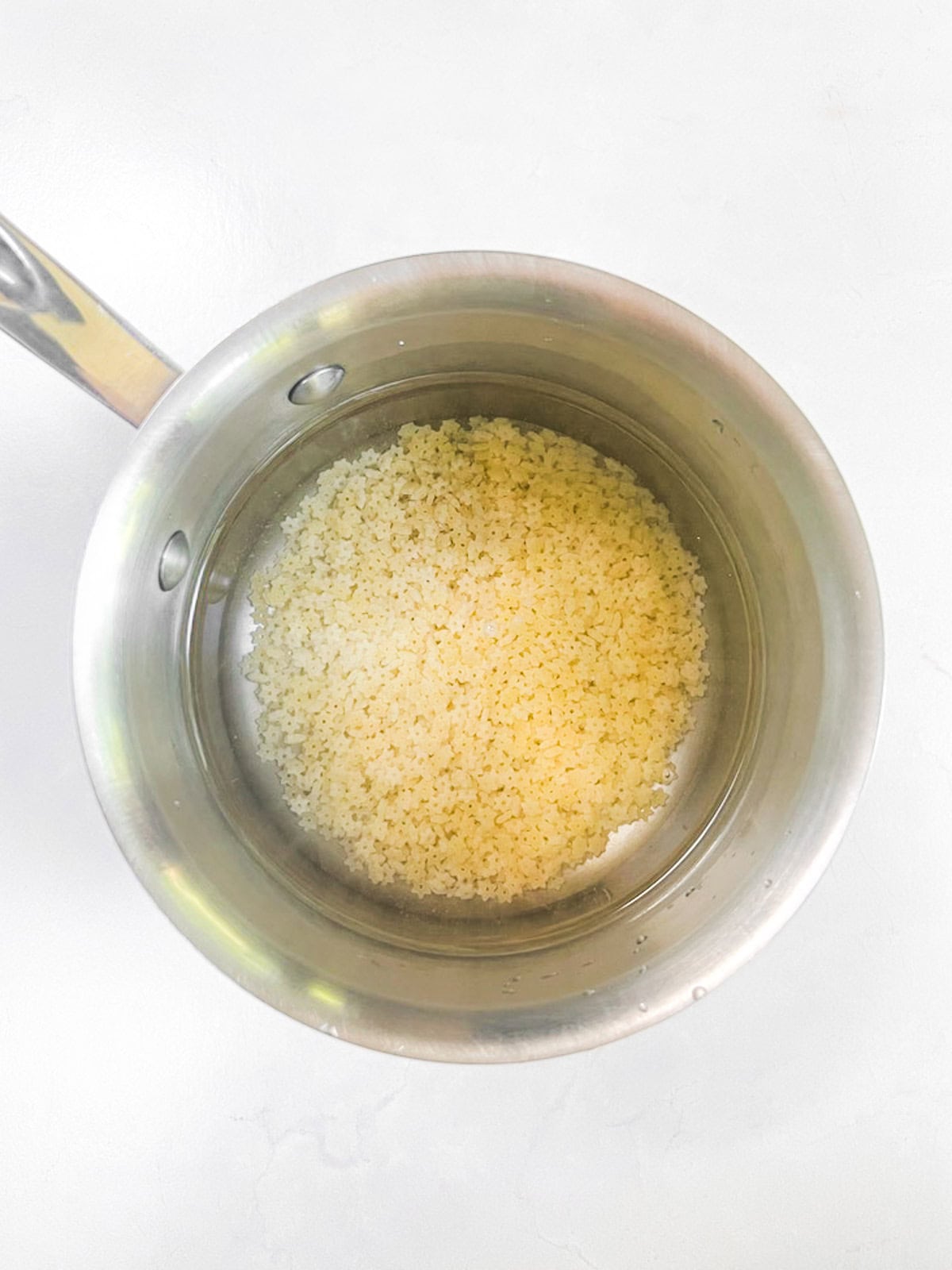
Step 1: Bring a small pot of water to a boil. Add the pasta and cook according to package directions until it reaches an al dente texture (firm with some “bite”). Drain in a colander and set aside.
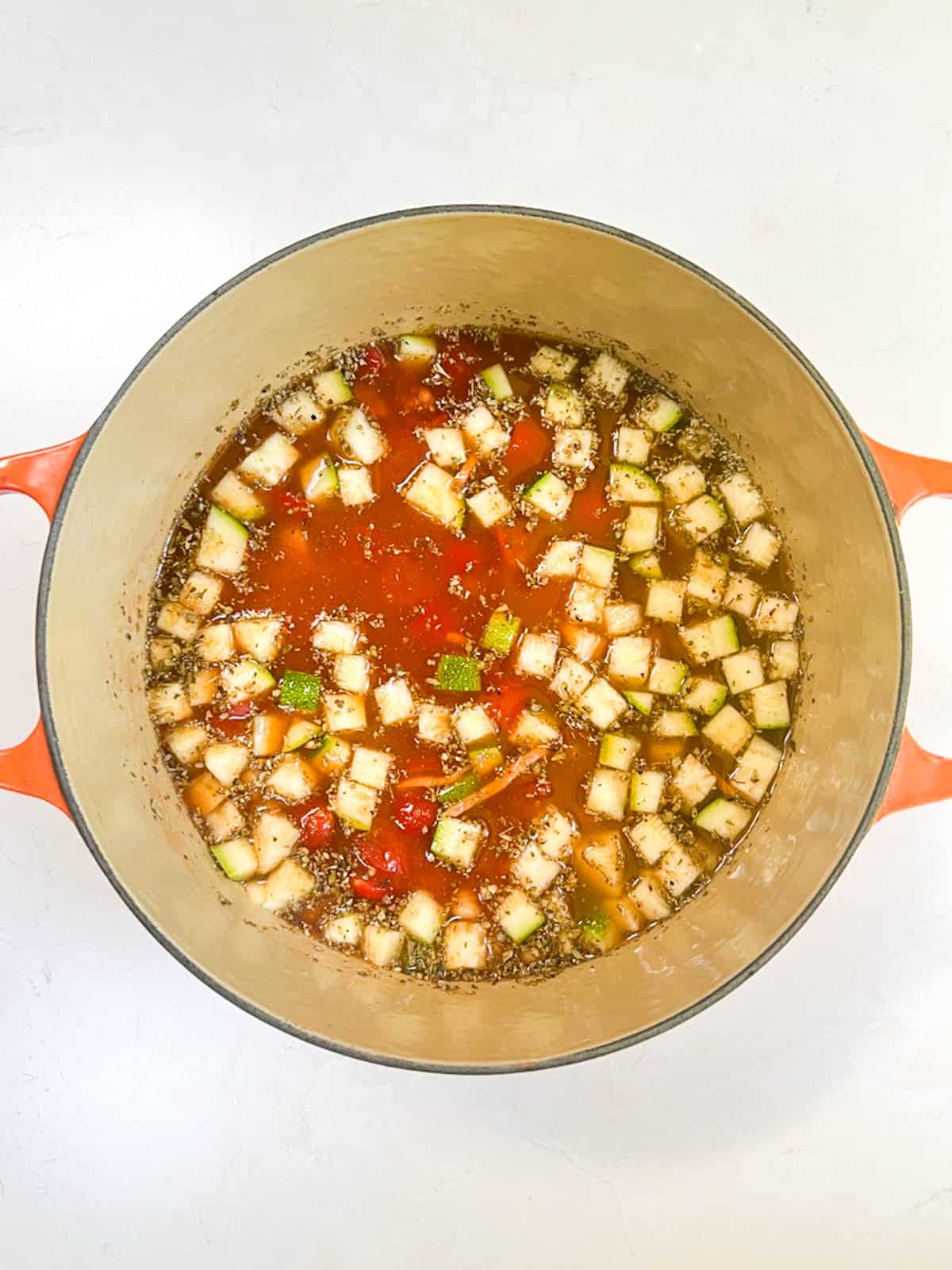
Step 2: Meanwhile, to a Dutch oven or large pot, add the zucchini, tomatoes, carrots, Italian seasoning, garlic powder, onion powder, a few cracks of black pepper, chickpeas, marinara sauce, and vegetable broth. Stir well.
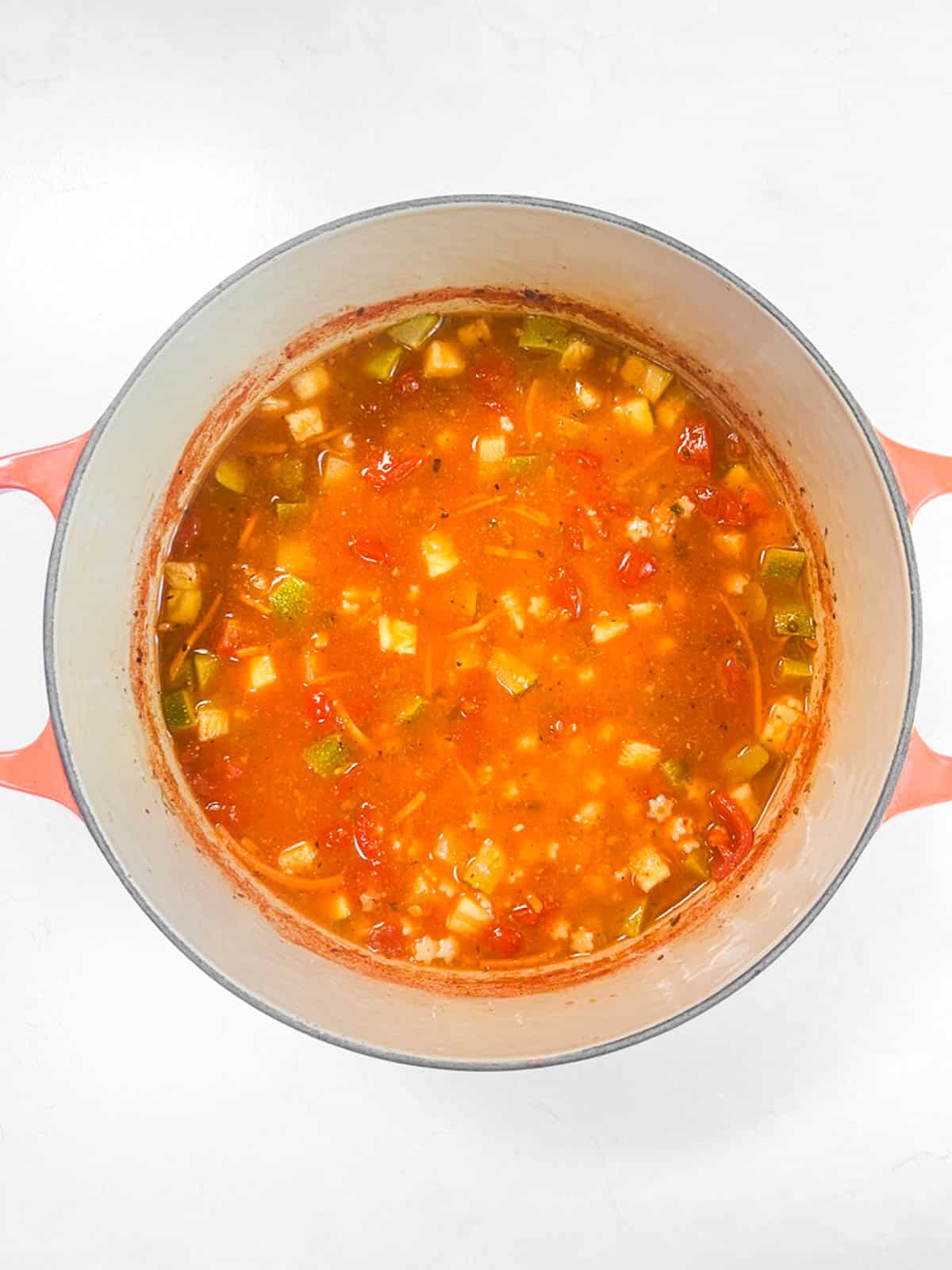
Step 3: Bring to a boil. Reduce the heat to medium and cook, uncovered, stirring occasionally, for 25 minutes or until the zucchini is soft.
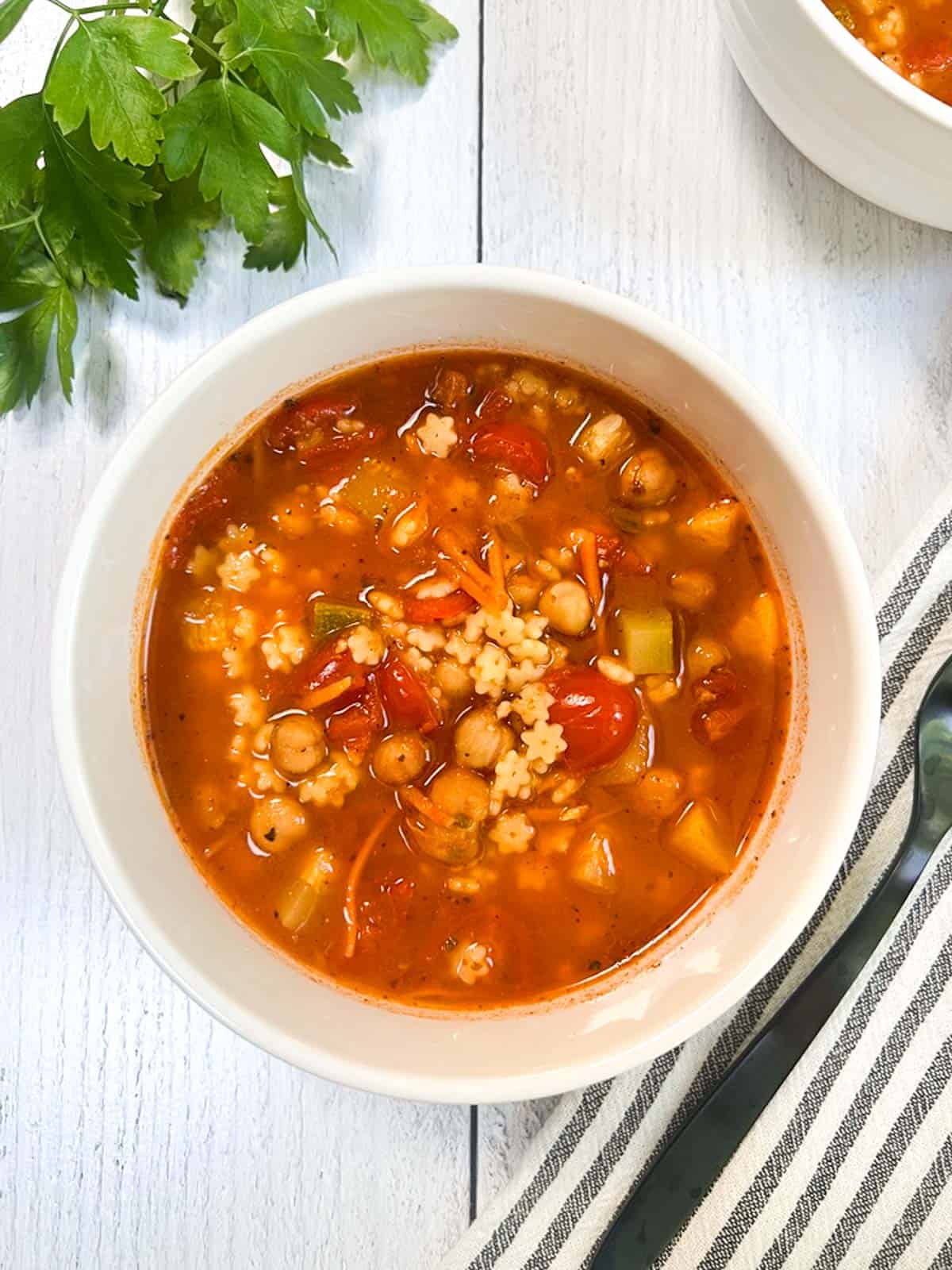
Step 4: Stir in the drained pasta (unless storing the pasta separately; see Note) and nutritional yeast. Taste and add more pepper or seasoning to suit your preferences. Garnish with fresh basil or Italian parsley leaves (optional). Serve immediately.
Substitutions
This recipe is flexible and forgiving, so feel free to swap in similar ingredients if you don’t have everything on hand. Easy substitutions include:
- Yellow squash or green beans instead of zucchini.
- Canned cannellini, Great Northern, or kidney beans instead of chickpeas.
- Canned diced tomatoes instead of grape tomatoes.
- Crushed or canned diced tomatoes plus a tablespoon of tomato paste instead of marinara sauce.
- Rice or broken spaghetti instead of small pasta.
Variations
- Gluten-free: To make this recipe gluten-free, substitute the regular pasta with gluten-free pasta or cooked rice.
- Low-carb: For a low-carb version, eliminate the pasta. If desired, add more non-starchy vegetables, such as cauliflower or spinach, to enhance the texture of the soup.
Equipment
- Measuring cups
- Measuring spoons
- Cutting board
- Sharp knife
- Small pot
- Colander
- Dutch oven or large pot
- Ladle (preferable) or large spoon
Storage
Store any leftover vegan minestrone soup in the fridge for 4 to 5 days or freeze it (allow it to cool to room temperature before freezing).
Top Tip
When stored, the pasta will absorb some of the broth and swell up, giving the soup a more stew-like consistency. If you know you’ll have leftovers and want to prevent this from happening, do not add all the pasta to the pot on the last step. Instead, just spoon a portion of the pasta into an individual serving bowl when you’re ready to eat it and add a serving of soup on top. Store the pasta separately in the fridge and add it to individual servings of soup right before you heat them up.
FAQ
Technically, you can, but all the starch from the pasta will end up in the broth, throwing off the color, texture, and taste of the soup. For this reason, I highly recommend cooking it separately and adding it at the end.
Yes! Spinach, kale, and Swiss chard all work well and will add a boost of nutrients and color. Simply stir them in at the end until they are just wilted.
I used stelline, which are fun little star shapes, but other types of small pasta, such as ditalini, elbow macaroni, small rotini, and small shells work just as well.
Minestrone Soup

Equipment
- measuring cups
- measuring spoons
- cutting board
- sharp knife
- small pot
- colander
- Dutch oven or large pot
- ladle or large spoon
Ingredients
- ½ cup short pasta (I used stelline, but ditalini, rotini, or elbow macaroni also work well; see Note)
- 1 medium zucchini diced
- 1 cup grape tomatoes quartered (measure them whole first, then quarter them)
- ½ cup matchstick carrots
- 1 tablespoon Italian seasoning
- ½ teaspoon garlic powder
- ½ teaspoon onion powder
- freshly cracked black pepper to taste
- 1 (15-ounce) can chickpeas rinsed and drained
- 1 cup marinara sauce
- 3 cups low-sodium vegetable broth
- 1 tablespoon nutritional yeast
Optional garnishes
- fresh basil leaves
- fresh Italian (flat-leaf) parsley leaves
Instructions
- Bring a small pot of water to a boil. Add the pasta and cook it according to the package directions (usually around 7 to 9 minutes at medium-high) until it reaches an al dente texture (firm with some “bite”). Drain it in a colander over the sink and set it aside.
- Meanwhile, to a Dutch oven or large pot, add the zucchini, tomatoes, carrots, Italian seasoning, garlic powder, onion powder, a few cracks of black pepper, chickpeas, marinara sauce, and vegetable broth. Stir well.
- Bring the ingredients in the Dutch oven or large pot to a boil. Reduce the heat to medium and cook, uncovered, stirring occasionally, for 25 minutes or until the zucchini is soft.
- Stir in the drained pasta (unless storing separately; see Note) and nutritional yeast. Taste and add more pepper or seasoning to suit your preferences. Garnish with fresh basil or Italian parsley leaves (optional). Serve immediately.
Notes
- Store any leftover soup in the fridge for 4 to 5 days. Vegan minestrone soup also freezes well (allow it to cool to room temperature before freezing).
- When stored in the soup, the pasta will absorb some of the broth and swell up, making the soup more stew-like. If you know you’ll have leftovers and want to prevent this from happening, do not add the pasta to the large pot on the last step. Instead, store the pasta separately and add a portion of it to each individual serving just before you are ready to eat it. Alternatively, store with all the cooked pasta in the soup but add a few splashes of broth before reheating, to give the soup a thinner consistency.